Cross-border strategic access & compliance

Lancore Pharma

Plan China entry without exposing sensitive data or choosing the wrong first move.

We help overseas biotech and medtech companies choose the right China pathway: Boao Lecheng special import for approved products, top-tier hospital IIT for early assets, and independent compliance advisory throughout.

Lecheng: eligibility, institution access, RWD strategy IIT: top-tier hospital pathway for early assets Compliance: import, HGR, vendor risk control
Three pathways, three decisions

Choose the entry route that fits the asset — not the one with the best marketing.

China entry fails when teams force a policy narrative onto an asset that doesn't qualify. Lancore starts with pathway triage so the right route is selected before budget and commitments are locked.

Top-tier hospital IIT

For Pre-IND, early PoC, or clinical-stage assets that need credible China physician validation and clinical signal. Not Lecheng — top-tier hospital IIT is the realistic first move for early assets.

Output: PI/department mapping, protocol & ethics pathway, import compliance risk assessment, first-patient planning & operating budget logic.

Boao Lecheng special import

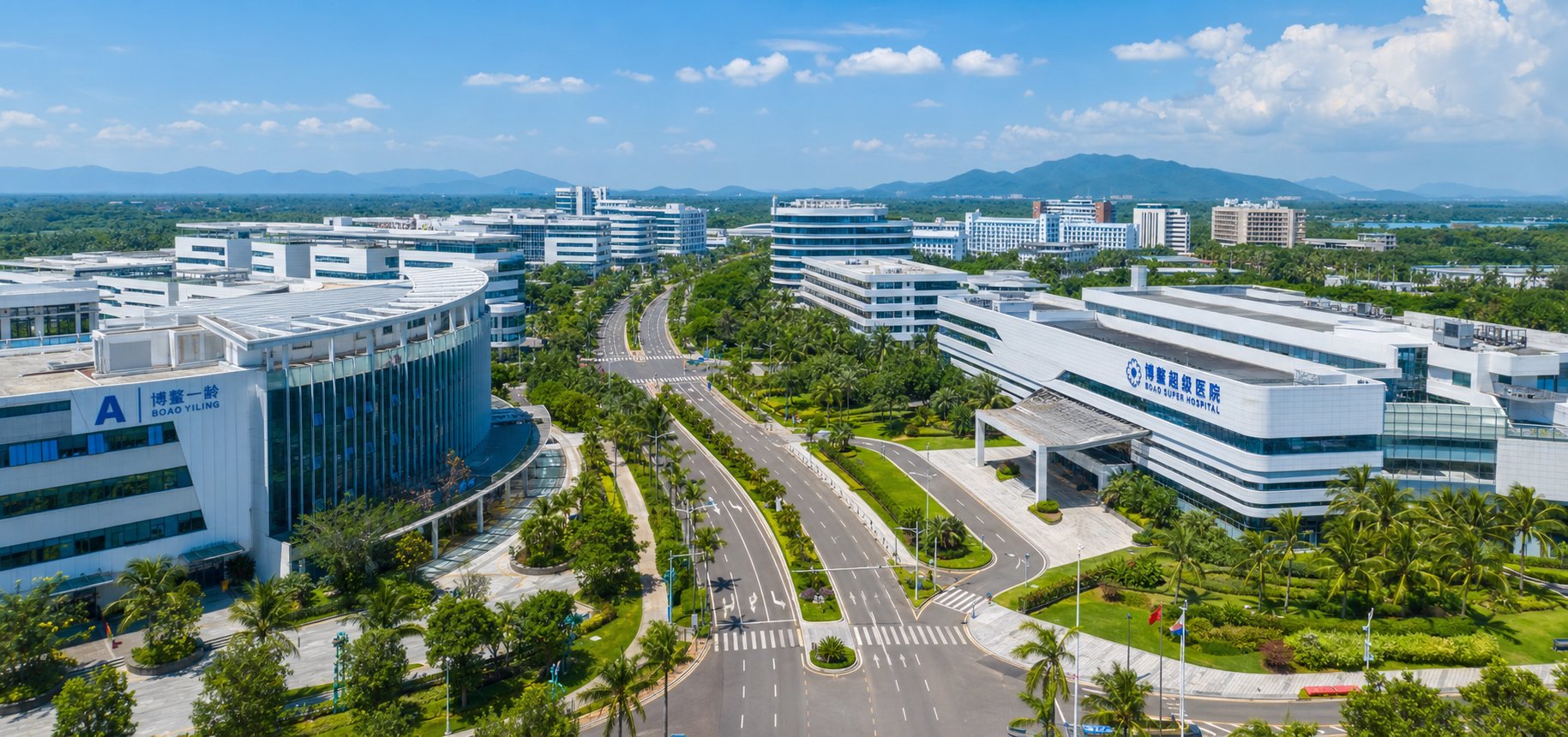
For overseas-approved drugs and devices that address clinically urgent need in China, lack an adequate domestic alternative, and can be imported through a licensed Lecheng medical institution. Real-world data generated in Lecheng may support future NMPA registration planning.

Output: eligibility screen, institution sponsor alignment, compliant access model, RWD and registration evidence strategy.

Cross-border compliance & vendor audit

IIT investigational import compliance is a known industry bottleneck. Lancore pressure-tests CRO/CDMO capability, quality systems, HGR data export pathways, and import logistics before you commit budget and timeline to a partner who cannot deliver.

Output: supplier shortlist & site audit, import & HGR compliance mapping, budget challenge, milestone governance.
Service lines

Three execution tracks, each tied to a different entry decision.

Overseas teams need to know which pathway is lawful, which partner can execute it, what evidence can be generated, and where execution risk can surface.

Clinical team in hospital setting
IIT enablement

Top-tier hospital IIT setup

For early or clinical-stage assets that need China physician validation and a realistic first-patient plan. We do not pretend research-stage work can become commercial Lecheng access — we build the IIT pathway that actually works.

  • PI and department fit mapping by indication, hospital specialty, and KOL track record
  • Protocol development, ethics submission, and operating package for IIT feasibility
  • Investigational product import compliance tracking — the known bottleneck across the industry
  • First-patient planning assumptions, patient-level cost drivers, and sponsor responsibility map
Boao Lecheng medical zone
Lecheng special access

Boao Lecheng Special Import & RWD

For overseas-approved drugs and devices. Lecheng may enable controlled patient access through a licensed medical institution while generating real-world data that can support future NMPA registration planning.

  • Eligibility screen: overseas approval status, China gap analysis, urgent clinical need assessment
  • Licensed institution sponsor alignment and pre-review material coordination
  • Commercial agreement structuring: compliant supply, pricing principles, and cross-border payment considerations
  • RWD protocol design aligned with NMPA evidence expectations and product-specific registration strategy
Laboratory quality control environment
Cross-border compliance

Regulatory, HGR & vendor risk advisory

For teams navigating China's regulatory complexity: IIT import compliance, human genetic resource (HGR) data export, CRO/CDMO capability audit, and cross-border payment structuring. Independent assessment before you commit.

  • CRO/CDMO shortlist, conflict screen, on-site capability and data integrity audit
  • Budget, timeline, and deliverable review with change-order governance after kickoff
  • HGR compliance: data classification, anonymization assessment, provincial-level export approval
  • Cross-border payment structuring under applicable free trade zone and medical institution requirements
Planning boundaries

Public-facing principles — detailed assumptions are shared after scoping.

China access planning depends on the asset stage, clinical urgency, hospital sponsor fit, import pathway, and evidence objective. Lancore keeps public guidance conservative and shares project-specific timelines, budgets, and counterparties only after non-confidential scoping or NDA.

IIT timing Early-stage assets require hospital-specific feasibility review, protocol alignment, ethics sequencing, and import compliance assessment before any timeline is proposed.
Budget discipline Patient-level cost assumptions depend on indication, site operations, product handling, subject support, and import logistics. Specific figures are not published as generic promises.
Lecheng access Special import eligibility is assessed case by case based on overseas approval status, China registration gap, clinical urgency, institutional sponsor fit, and current policy practice.
RWD utility Lecheng real-world data can support registration strategy when designed early, but it does not replace formal NMPA requirements or product-specific evidence obligations.

Lancore does not publish client-specific budgets, partner contacts, or operational assumptions on open webpages. Project-level details are shared only after fit assessment and appropriate confidentiality controls.

Engagement model

Triage the pathway first. Then build the execution file.

Lancore turns a broad China objective into a sequence of decisions, counterparties, materials, and risk controls — specific enough to approve, fund, and govern.

01

Asset triage

Stage, indication, overseas approval status, China objective, and regulatory constraints are mapped to a pathway recommendation.

02

Compliance screen

Lecheng eligibility, IIT import path, HGR data classification, payment structuring, and vendor capability are checked before any external outreach.

03

Partner alignment

Hospitals, PIs, licensed Lecheng institutions, CROs, and CDMOs are matched to the chosen pathway after project-specific scoping.

04

Execution package

Protocol, ethics, import logistics, pricing, RWD framework, supply chain, and vendor contracts are prepared for decision.

05

Governance

Milestones, evidence outputs, budget drift, data export compliance, and escalation points are monitored through delivery.

Team & network

A China access practice built on fieldwork, not slide decks.

Lancore was founded on the conviction that China entry advice is only credible when grounded in hospital operations, regulatory practice, and import execution — not secondhand policy summaries.

Founder

Cross-border pharmaceutical strategy and regulatory compliance advisor. Lancore was founded to bridge the structural gap between overseas biotech innovation and China's clinical and regulatory ecosystem.

  • Domain expertise: cell and gene therapy (CGT), rare diseases, AAV-based gene therapy programs
  • Operating background: biotech platform operations, translational research management, China access planning
  • Focus: helping overseas teams select the right China entry pathway before committing resources or disclosing sensitive data

Team

Lancore's core team combines complementary expertise across clinical operations, regulatory affairs, and cross-border transaction structuring. All team members have direct, hands-on experience managing overseas-to-China clinical programs from protocol design through delivery.

  • Clinical operations: IIT protocol design and hospital ethics interface across neurology, rare disease, oncology, and wound care indications
  • Regulatory affairs: NMPA registration strategy, HGR compliance program design, Order 818 clinical research filing, and Lecheng special import pre-review
  • Transaction & quality: cross-border payment structuring, CRO/CDMO audit governance, and milestone-based project controls

Field-informed network

Lancore maintains working familiarity with the institutional ecosystem required for China access. Specific counterparties are discussed only after project scoping and confidentiality review.

  • Boao Lecheng ecosystem: licensed medical institutions, special import process, RWD planning, and policy interface
  • Top-tier hospital ecosystem: IIT sponsor fit, department capability, PI engagement model, and ethics sequencing
  • Regulatory and trade ecosystem: investigational import, free trade zone practice, data export, and payment compliance
  • Execution ecosystem: CRO/CDMO qualification, cold-chain logistics, quality systems, and milestone governance
Common questions

What overseas teams ask most often.

Scroll through 20 questions covering Lecheng policy, IIT regulations, Order 818 compliance, HGR, import logistics, and cross-border strategy.

Lecheng policy fundamentals
Boao Lecheng International Medical Tourism Pilot Zone is China's designated zone for accelerated access to overseas-approved drugs, devices, and biomedical technologies that are not yet registered in mainland China. It supports two main tracks: (A) special import of drugs and medical devices already approved by ICH/IMDRF regulatory authorities, and (B) clinical translational application of biomedical new technologies such as cell therapy, gene therapy, and tissue engineering. Lecheng is a commercialization sandbox — not a research platform.
No. Lecheng special import requires the product to hold approval from a recognized ICH/IMDRF regulatory authority. Pre-IND or early clinical-stage assets do not qualify for the special import pathway. Such assets should instead consider top-tier hospital IIT in China — a separate pathway that Lancore can build from the ground up.
It may qualify if the product is approved overseas (FDA/EMA/PMDA), is not registered in China, addresses clinically urgent need, and lacks adequate domestic alternatives. Rare disease products often receive priority consideration. Lancore runs a structured eligibility screen before any external engagement.
Four criteria: (1) overseas marketing approval from an ICH/IMDRF jurisdiction, (2) no equivalent product registered in China, (3) clinically urgent need that cannot be met by available domestic alternatives, and (4) importation through a licensed Lecheng medical institution. Eligibility is assessed case by case — not every approved product automatically qualifies.
The process involves: institution sponsor alignment, pre-review material preparation and submission, expert evaluation (by the Lecheng Administration Bureau via a pre-review mechanism), and import logistics coordination. Timelines are project-specific and depend on product type, documentation completeness, and the designated institution's readiness. Specific day counts are discussed only after project scoping.
Only institutions licensed by the Lecheng Administration Bureau can serve as sponsors for special import. These include public hospital branches (such as Ruijin Hainan Hospital) and specialized private institutions (such as West China Lecheng Hospital). Each institution has different therapeutic strengths, patient volumes, approval experience, and operational capabilities. Lancore assists with institution matching based on product profile.
Clinical data generated during Lecheng patient use can be structured as real-world evidence (RWE) to support NMPA marketing authorization. Multiple products have successfully used Lecheng RWE for full NMPA registration. However, RWE supplements — it does not replace — formal NMPA requirements. RWD protocol design must be planned early to maximize regulatory utility.
Lecheng commercialization
Lecheng special import may allow compliant patient access through a licensed medical institution when eligibility requirements are met. Clinical trial or IIT stage use should not be treated as commercialization. Lancore separates the two pathways clearly at the outset — commercial and research-stage activities have different legal, compliance, and operational frameworks.
For Lecheng special import of overseas-approved drugs/devices: yes, compliant patient access through a licensed medical institution is permitted when eligibility requirements are met. For IIT, clinical trials, or any research-stage activity: patient-charging is not permitted. Investigational products must be provided free of charge to subjects. These boundaries are strictly enforced under Chinese law.
Yes. Under the Biomedical New Technologies Regulation (effective February 2025), Lecheng provides a dedicated translational application pathway for cell therapy, gene therapy, and tissue engineering products. If the product is overseas-approved, it may enter via Track A (special import). If it has completed domestic IIT, it may enter via Track B (clinical translational application with price registration). Each track has distinct eligibility requirements and compliance obligations.
IIT policy & Order 818
Investigator-Initiated Trial (IIT) in China refers to clinical research initiated and conducted by a qualified medical institution, typically to evaluate the safety and efficacy of an investigational product. IIT is the appropriate first step for Pre-IND or early clinical-stage assets that need physician validation and clinical signal. It is not a commercialization pathway — subjects cannot be charged for investigational products or procedures under IIT.
State Council Decree No. 818 (effective May 1, 2026) is China's primary regulation governing the clinical research and translational application of biomedical new technologies — including gene therapy, cell therapy, tissue engineering, and other modalities operating at the cellular/molecular level. It mandates: (1) clinical research must be conducted at a Grade 3A (tertiary) hospital, (2) prior non-clinical safety/efficacy evidence is required, (3) academic and ethics review must precede filing, and (4) filing with the National Health Commission is required within 5 working days of dual review approval. Non-compliance can trigger study suspension or termination.
Under Order 818, clinical research institutions must be Grade 3A (tertiary) hospitals with: a qualified academic review committee and ethics committee, appropriate facilities and equipment for the specific technology, qualified investigators (PI must hold a medical license with senior professional title), sufficient research funding, and management systems for quality, ethics, and subject protection. The hospital is the accountable legal entity for all IIT activities.
The process: (1) Non-clinical safety/efficacy evidence package preparation, (2) Sponsor and clinical research institution agreement execution, (3) Protocol development, (4) Academic review by the hospital's clinical research academic committee, (5) Ethics review by the hospital's ethics committee, (6) Filing with the National Health Commission within 5 working days of dual review approval. Required filing materials include: sponsor and institution information, investigator qualifications, non-clinical study reports, protocol, risk assessment, review opinions, informed consent template, and funding documentation. Technology-specific filing guidance checklists have been published for 14 categories including gene therapy, stem cells, and immune cells.
Under Order 818, the clinical research sponsor must be a legally established entity within China. An overseas biotech without a China-incorporated entity cannot directly serve as the sponsor. However, the sponsor role can be fulfilled by the clinical research institution itself (hospital-sponsored IIT) or by a qualified domestic partner entity. Lancore advises on sponsor structure options based on the product profile, IP strategy, and commercial objectives.
Order 818 is supported by a risk classification guide that categorizes biomedical new technologies based on their novelty, invasiveness, and potential harm. Technologies are assigned risk levels that determine the intensity of regulatory oversight, review requirements, and post-filing monitoring obligations. High-risk technologies face more rigorous evaluation by the National Health Commission, including potential third-party expert assessment. The risk level should be determined early in the planning process.
Import & HGR compliance
Investigational product import for IIT in China remains a common execution bottleneck. There are currently no unified national rules specifying which authority issues import clearance for IIT materials. Hospitals, as the accountable legal entities, typically will not sign ethics approval documents without confirmed import compliance. This has stalled numerous overseas programs. Lancore treats import compliance as a structural workstream to be addressed before operational commitments are made. Approaches include free trade zone import models and hospital-specific import pathways, each with different regulatory and practical tradeoffs.
China's HGR regulations govern the collection, storage, use, and cross-border transfer of human genetic materials and associated data. Key considerations: (1) Samples collected from Chinese subjects fall under HGR jurisdiction, (2) Foreign parties require a Chinese party to collaborate for HGR-related activities, (3) Data export may require approval or filing depending on classification, (4) Clinical data, medical imaging, and protein data have been excluded from HGR definition in 2025-2026 updates — simplifying export for certain study types. HGR strategy should be addressed early, as it impacts protocol design, site selection, and partner structure.
Hainan FTP provides several advantages: (1) data export approval for Lecheng-generated clinical data may be processed at the provincial level rather than through central authorities in Beijing, (2) zero import tariff applies to Lecheng special import products, (3) anonymized clinical data export pathways are more established than in many mainland settings. However, these benefits apply within specific regulatory frameworks and are not automatic — each project requires case-by-case confirmation.
Strategy & engagement
The decision turns primarily on the asset's regulatory status. If the product is FDA/EMA/PMDA approved, Lecheng special import is usually the most direct pathway — enabling patient access, potential revenue generation, and RWD collection. If the product is Pre-IND or in early clinical development, top-tier hospital IIT is the appropriate first step. IIT builds clinical data and physician relationships; Lecheng leverages existing approvals. Some assets may need to sequence through both (IIT first, then transition to Lecheng upon overseas approval).
For an initial pathway assessment, Lancore typically needs: asset stage (Pre-IND / clinical / approved), product type (drug / device / CGT), overseas approval jurisdiction if applicable, China objective (IIT signal / Lecheng patient access / NMPA registration preparation / vendor evaluation), and whether any China hospital, institution, CRO, or CDMO is already under discussion. No confidential data, unpublished results, or patient-level information is required at this stage.
Contact

Start with a non-confidential pathway assessment.

Share enough information for Lancore to classify the likely China pathway and identify the first diligence questions. Detailed data can wait until an NDA is in place.

What helps us triage your pathway

Asset stage (Pre-IND / clinical / approved), product type (drug / device / CGT), overseas approval jurisdiction, China objective (IIT signal / Lecheng revenue / NMPA registration / vendor audit), target timeline, and whether a China hospital, institution, CRO, or CDMO is already under discussion.

Do not submit confidential asset details, unpublished data, trade secrets, or patient-level information before an NDA is in place.

Submissions are processed through Formspree. No confidential data is transmitted without prior agreement.